
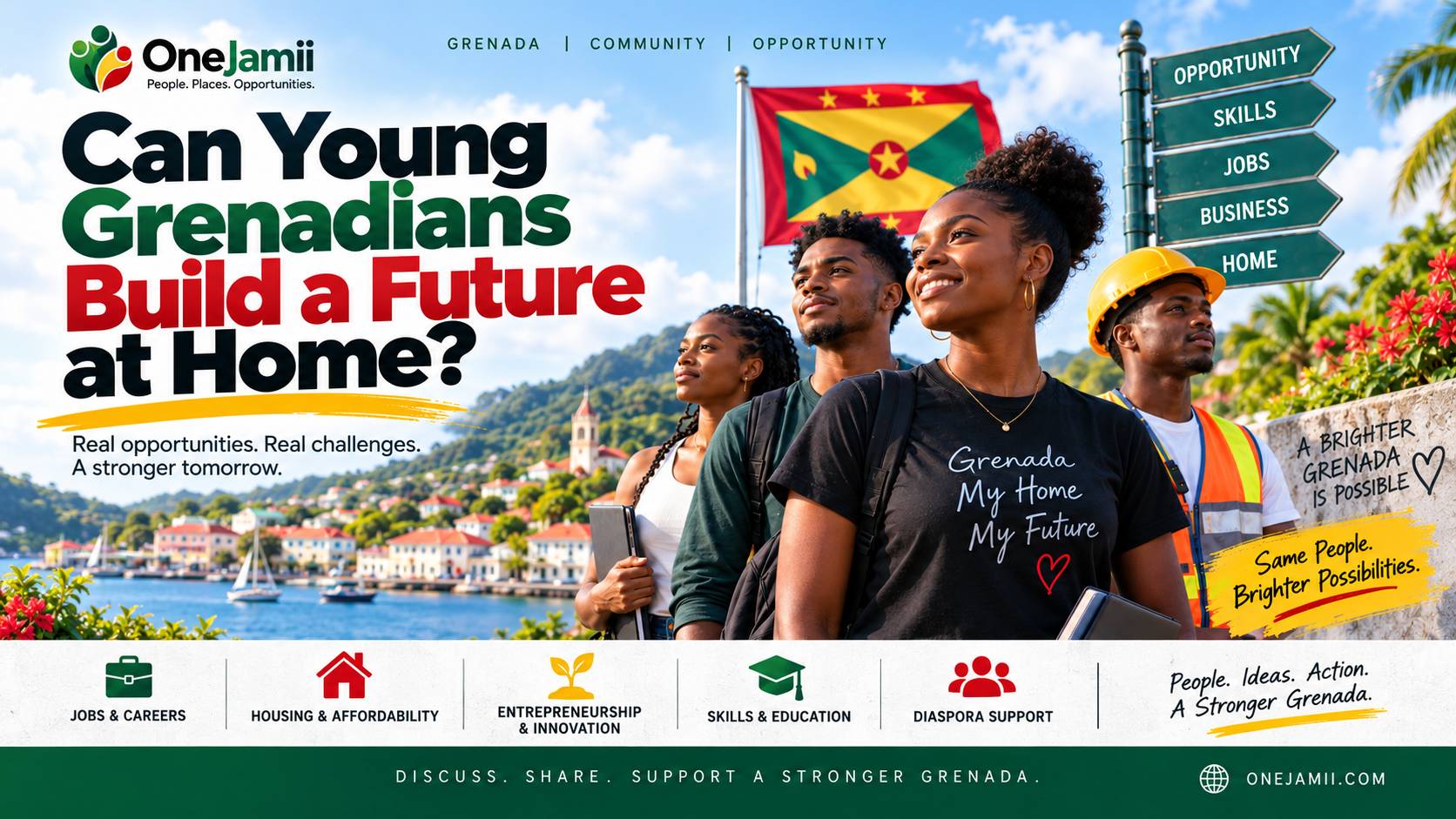
For many young Grenadians, the question is becoming increasingly important: Can I build the life I want without having to leave Grenada?
The answer depends on more than having a job. It involves access to skills, affordable housing, opportunities to start businesses, decent wages, financing, technology, and a real sense that there is room to grow.
Grenada has been expanding programmes aimed at young people. The 2026 Budget allocated EC$15 million to establish the Youth Empowerment Agency, intended to bring together programmes focused on entrepreneurship, leadership and youth participation.
There are also practical efforts to strengthen employment and business skills. Grenada’s climate-smart agriculture and rural enterprise programmes have offered vocational training, apprenticeships, business support and financing aimed particularly at young people between 16 and 35.
More recently, 10 young entrepreneurs received seed grants through the YOUtrepreneur Programme, while a wider group became eligible for concessional business loans.
These are positive steps. But the bigger question is whether opportunities are expanding quickly enough to match young people’s ambitions.
Young people today are thinking about more than simply finding employment.
They want careers with room for advancement. They want to own homes. They want to travel, invest, start businesses, raise families and enjoy a reasonable standard of living.
That means Grenada’s youth strategy cannot focus only on placing people into jobs. It also has to create pathways toward ownership, financial security and upward mobility.
Housing is a major part of that conversation. Government has acknowledged a housing deficit and continues to pursue housing initiatives, including Project 500 and post-Hurricane Beryl rebuilding programmes.
For younger Grenadians, however, the challenge is not simply whether new homes are being built. It is whether they can realistically afford to rent, buy land, qualify for financing, or eventually own a home.
Grenada’s economy is changing.
Tourism will remain important, but young people are also being exposed to opportunities in technology, agriculture, renewable energy, construction, the creative economy and digital services.
In 2026, Grenadian educators participated in training designed to strengthen technical and vocational education, including skills such as digital literacy, problem-solving, teamwork and adaptability.
Young people across the region have also participated in programmes involving generative AI and Python, giving them exposure to digital skills increasingly important in the modern workforce.
Grenada’s creative sector is another area with potential. Programmes such as Sing Grenada are helping younger creatives develop skills in music, songwriting and production while exploring ways creative talent can become a viable career.
The opportunity is there, but training must remain closely connected to real jobs, real businesses and real earning potential.
Not every young Grenadian will find the opportunity they want through traditional employment.
Some will need to create their own.
A stronger environment for entrepreneurship could make a significant difference, particularly if young business owners can access affordable financing, mentorship, technology, markets and customers.
The goal should not simply be encouraging young people to “start a business.” It should be helping them build businesses that can survive, employ others and eventually grow.
That means making it easier for a talented young person with a good idea to move from concept to income.
Grenadians abroad also have a role.
Young people at home can benefit from mentors, investors, professional networks and market access from Grenadians living overseas.
A diaspora professional might help a local entrepreneur reach customers in Canada, the United States or the United Kingdom. A successful business owner abroad could mentor someone starting out in Grenada. Families overseas may also be able to support education, investment and business development rather than only consumption.
The relationship between Grenada and its diaspora can become more than remittances. It can become a bridge to opportunity.
Migration will always be part of Grenadian life. Studying, working and gaining experience abroad can be extremely valuable.
The problem comes when leaving feels like the only path to progress.
Grenada should aim to become a country where a young person can leave and return, stay and build, or move between both worlds without feeling that ambition requires abandoning home.
That will take time, investment and continued improvement.
But the goal is worth pursuing.
Because Grenada’s future will ultimately depend not only on the developments being announced today, but on whether the next generation believes there is a future for them in the country those developments are creating.
OneJamii — Stronger Together.