
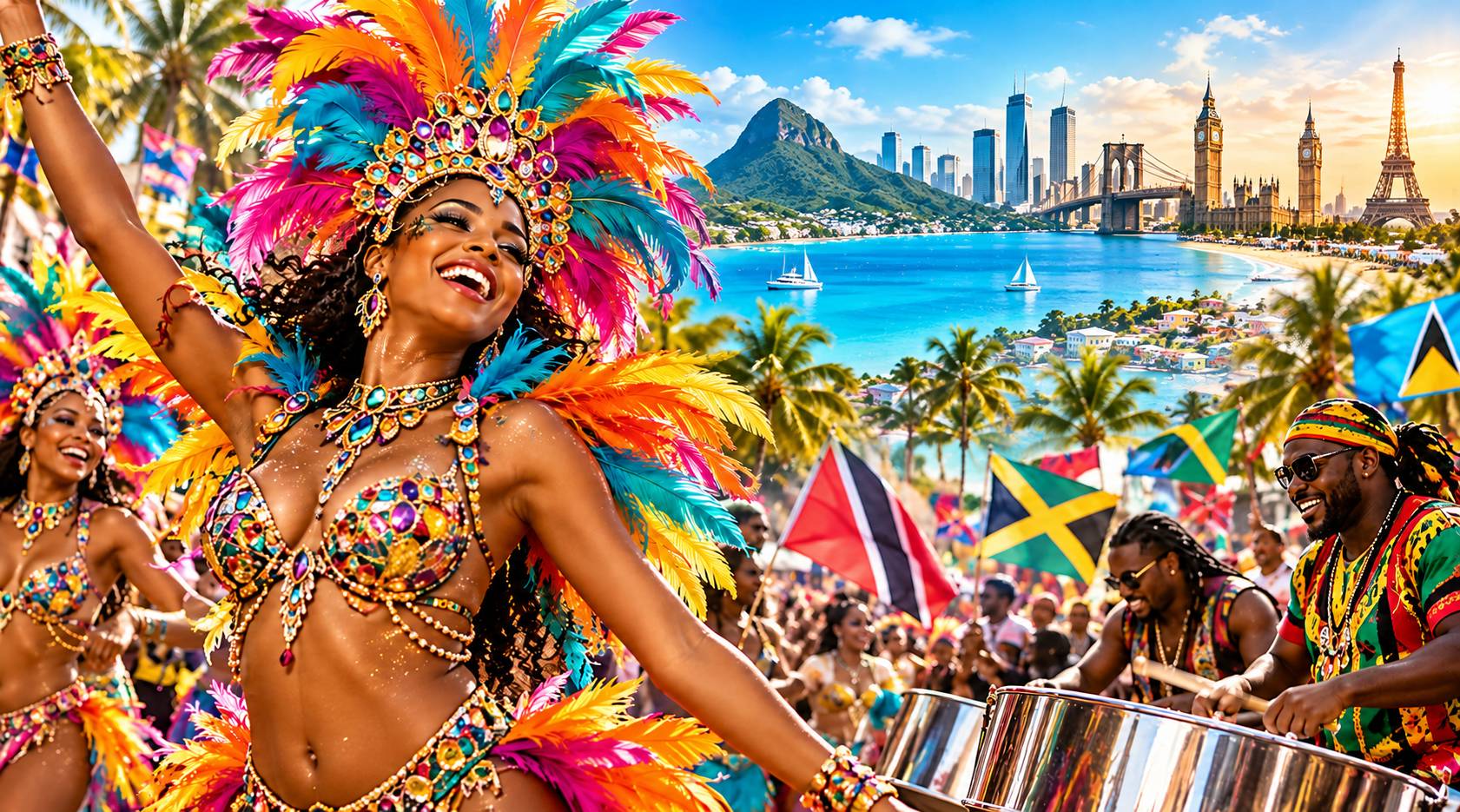
From Grenada's Spicemas to Toronto and Brooklyn, Caribbean Carnival has become a powerful celebration of identity, heritage, and community.
Every year, the unmistakable rhythms of soca, calypso, and steelpan bring communities together in an explosion of music, colour, creativity, and cultural pride.
From the streets of Grenada and Trinidad and Tobago to Toronto, New York, and London, Caribbean Carnival has grown into an international cultural phenomenon.
But behind the elaborate costumes, energetic music, and colourful parades lies something much deeper.
Carnival is more than a celebration. It is a living expression of Caribbean history, freedom, creativity, and identity.
Carnival traditions developed through the Caribbean's complex history of African heritage, European colonialism, enslavement, emancipation, and cultural resistance.
Over generations, Caribbean communities transformed these influences into distinctive celebrations featuring music, masquerade, dance, storytelling, and artistic expression.
Today, individual islands maintain traditions that reflect their unique histories.
Trinidad and Tobago is internationally recognized for its Carnival traditions and its contributions to calypso, soca, and steelpan music.
Grenada's Spicemas is especially known for its traditional masquerade characters, including Jab Jab, Shortknee, and Vieux Corps.
In Jamaica, music and dance celebrations reflect the country's rich contributions to reggae, dancehall, and other artistic traditions.
Across the wider Caribbean, festivals continue to evolve while maintaining connections to the generations that came before.
Grenada's annual Spicemas celebrations demonstrate how traditional culture and modern entertainment can exist side by side.
J'Ouvert is one of the island's most distinctive experiences, while Traditional Mas preserves characters and performances rooted in Grenadian history.
The celebrations also include soca competitions, steelpan performances, children's carnival activities, and colourful costumed parades.
During Spicemas 2026, cultural organizers highlighted the importance of passing traditional masquerade practices and steelpan music to younger generations.
The impact extends beyond the parade routes.
Carnival supports costume designers, musicians, photographers, transport providers, food vendors, accommodation operators, and numerous other businesses.
It creates opportunities for local talent while attracting returning nationals and international visitors.
Thousands of kilometres away, Toronto has developed one of the world's most recognizable Caribbean Carnival celebrations.
The Toronto Caribbean Carnival, formerly widely known as Caribana, has become an important part of Canada's cultural landscape.
In August 2026, the Canadian government recognized the festival's 59th year and announced funding to support its cultural activities.
For Caribbean Canadians, the event is much more than a summer attraction.
It offers an opportunity to celebrate heritage, reconnect with traditions, introduce children to Caribbean culture, and share that culture with people of different backgrounds.
The festival also provides a platform for musicians, designers, performers, entrepreneurs, and community organizations.
For some families, attending Carnival is an annual tradition that helps younger generations understand where their parents and grandparents came from.
In New York City, Brooklyn's West Indian American Day Carnival has become a major expression of Caribbean identity.
Each Labor Day, Eastern Parkway transforms into a celebration of Caribbean music, costumes, food, and community pride.
The 2026 festivities again brought together people whose roots extend across Grenada, Jamaica, Trinidad and Tobago, Haiti, Barbados, Guyana, and many other countries.
J'Ouvert, steelpan performances, cultural activities, and masquerade traditions preserve important connections to the Caribbean.
The event also introduces Caribbean culture to a broad American audience.
As Caribbean families settle in different countries, preserving cultural traditions becomes increasingly important.
Children growing up in Canada or the United States may not experience everyday life in the Caribbean.
However, music, food, festivals, language, and storytelling can provide meaningful connections to their heritage.
Carnival creates opportunities for families to discuss history, celebrate identity, and share traditions across generations.
It is also important to recognize the artists, community organizers, craftspeople, and cultural practitioners who preserve these traditions throughout the year.
Without their contributions, festivals risk becoming spectacles that lose touch with their origins.
Caribbean Carnival continues to reach new audiences around the world.
Social media, international travel, music streaming, and cultural exchanges have helped expand its visibility.
However, its greatest strength remains the communities behind the celebrations.
From a small village masquerade in Grenada to a major parade in Toronto or Brooklyn, Carnival continues to tell the story of a people whose culture travels far beyond geographical borders.
The costumes may change. The cities may change. But the Caribbean spirit continues to live wherever its people gather.