
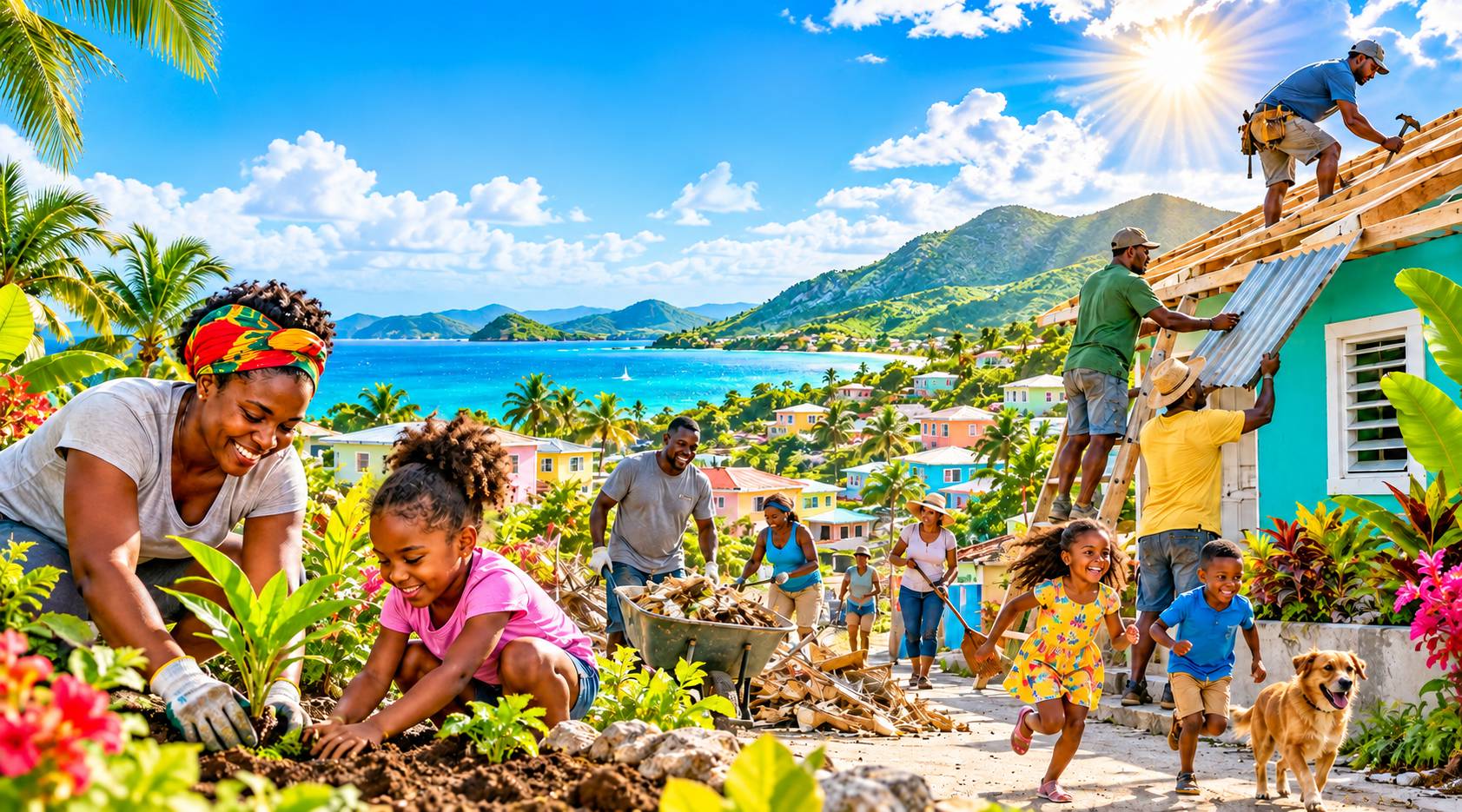
Hurricanes have exposed the Caribbean's vulnerabilities, but they have also highlighted the determination of island communities and the importance of preparing for the future.
In July 2024, Hurricane Beryl swept through parts of the Caribbean, causing devastating damage to homes, businesses, infrastructure, and livelihoods.
For communities in Carriacou, Petite Martinique, Saint Vincent and the Grenadines, and other affected areas, the disaster brought sudden and enormous challenges.
Families lost homes. Businesses were disrupted. Roads, schools, electricity networks, and other essential services suffered extensive damage.
More than two years later, recovery continues to offer important lessons about how Caribbean communities can become stronger and better prepared for future disasters.
When a major hurricane strikes, the damage extends far beyond collapsed buildings and fallen trees.
A damaged home can displace a family for months.
A destroyed fishing boat can eliminate a household's primary source of income.
A damaged school can interrupt children's education.
When electricity, water, communication networks, and transportation are disrupted, businesses may struggle to reopen even if their buildings survive.
In small island communities, where economic activity and infrastructure are often concentrated in limited areas, a single major storm can have consequences that last for years.
The World Bank reported that Hurricane Beryl affected an estimated 56% of the population of Saint Vincent and the Grenadines in 2024.
In the Southern Grenadines, more than 90% of buildings were heavily damaged or destroyed.
These figures demonstrate why hurricane preparedness is not simply a seasonal concern. It is a long-term development priority.
Among the communities severely affected by Hurricane Beryl were Grenada's sister islands of Carriacou and Petite Martinique.
Recovery efforts have involved governments, residents, regional institutions, international organizations, and development partners.
In June 2026, the United Nations Development Programme reported progress under a Canada-supported regional recovery initiative.
One important development was the validation of a Housing Recovery Plan for Carriacou and Petite Martinique.
The initiative also supported work to strengthen housing guidelines and improve disaster-recovery planning.
These measures reflect a growing recognition that reconstruction should not focus only on replacing what was lost.
Where possible, it should also reduce the risk of similar damage during future disasters.
Across the Caribbean, construction standards and infrastructure resilience are becoming increasingly important.
Stronger roof connections, properly engineered structures, appropriate building materials, effective drainage, and protection against flooding can help reduce storm-related damage.
However, there is no single design that suits every Caribbean location.
Coastal communities face different risks from mountainous areas, while smaller islands may have unique challenges involving transportation, materials, and access to specialized services.
Professional assessments, local building codes, and site-specific engineering remain essential.
Resilience also extends beyond individual homes.
Communities need dependable emergency shelters, accessible roads, telecommunications, healthcare services, and reliable water and electricity supplies.
Investments in these systems can make an enormous difference when disasters occur.
When hurricanes strike, Caribbean people living abroad often mobilize to support relatives and communities back home.
Diaspora organizations, churches, cultural groups, charities, and individuals may organize fundraising campaigns, collect essential supplies, or help coordinate assistance.
Communities in Canada, the United States, the United Kingdom, and elsewhere can play an important role in recovery.
However, good intentions must be matched with coordination.
Donated supplies should reflect actual community needs, and financial contributions should be directed through reliable organizations with appropriate accountability.
In some situations, supporting local suppliers and businesses may be more effective than shipping goods from overseas.
This approach can help meet immediate needs while supporting the recovery of the local economy.
Although hurricanes cannot be prevented, households can take practical steps to reduce their vulnerability.
Families should understand the hazards affecting their homes, including wind exposure, flooding, and landslide risks.
Important preparations include maintaining an emergency supply of water and essential items, protecting important documents, reviewing evacuation plans, and identifying reliable sources of official information.
For people living overseas who have relatives in the Caribbean, preparedness can also include establishing an emergency communication plan.
Families should agree on how they will contact one another if telephone or internet services are interrupted.
Property owners should inspect roofs, drainage, windows, and other vulnerable areas before severe weather.
Insurance coverage, where available, should also be reviewed carefully.
These preparations cannot eliminate every risk, but they can help households respond more effectively.
Caribbean economies rely on important sectors such as tourism, agriculture, fishing, transportation, and small-business activity.
When storms damage infrastructure, the effects can spread quickly across these industries.
Investments in resilient buildings, improved drainage, stronger electricity networks, and reliable communications can help reduce future economic disruptions.
The World Bank has emphasized that Caribbean resilience requires more than physical reconstruction.
It also involves financial preparedness, effective institutions, disaster management, and community participation.
This broader approach recognizes that recovery is strongest when people, businesses, and public institutions are prepared to respond together.
The Caribbean has a long history of overcoming adversity.
That resilience can be seen in neighbours helping neighbours, volunteers clearing roads, small businesses reopening, and families rebuilding after enormous losses.
But resilience should not mean that communities are expected to endure repeated disasters without adequate support.
It must also involve better planning, sound investment, stronger public services, and long-term protection for vulnerable communities.
Hurricane Beryl demonstrated how quickly lives can be disrupted.
The recovery process offers an opportunity to think differently about the future.
The goal should not simply be to rebuild what existed before the storm. It should be to create communities that are safer, stronger, and better prepared for whatever comes next.